Greater Cincinnati & Northern Kentucky · Open 24 Hours
Garage door
trouble?We answer at 3am.
Broken springs, snapped cables, doors off the track and dead openers — across Greater Cincinnati and Northern Kentucky, any hour. Most repairs finished on the first visit.
- from 45 Google reviews
- 5.0
- nights, weekends, holidays
- 24/7
- communities covered
- 82
- for the safety inspection
- $0
The offer
Free 21-point garage door safety inspection
We check all 21 points, hand you the written findings, and tell you what does not need fixing. There is no charge and no obligation to book work.
The reason this trade has a reputation problem is that a homeowner standing in the driveway has no way to verify what they are being told. You cannot see the state of a cable drum or a bearing plate from the ground. Handing over the findings in writing — including the parts we checked and found fine — is the only honest answer to that.
Google Guaranteed
Google independently verified our license, insurance and a background check before awarding this. It is not a badge that can be bought, and jobs booked through Google are backed by their guarantee.
What we fix
Garage door services across the Cincinnati metro
Know what you are paying for
The six parts that fail, and which two you should never touch
Nearly everything that decides whether a garage door is safe sits where you cannot see it. Here is what a technician is actually looking at.
- 1
Torsion spring
Carries the weight. Rated ~10,000 cycles.
- 2
Cable drum
Grooved drums saw through new cables.
- 3
Lift cable
Frays from the bottom, where salt collects.
- 4
Roller & hinge
First thing to go loud.
- 5
Bottom bracket
Under full spring tension. Never unbolt.
- 6
Photo-eye sensor
Required by law since 1993.
Local conditions
Why garage doors fail in Greater Cincinnati
Cincinnati sits in the Ohio River valley, which means high summer humidity and a winter that crosses the freezing point over and over rather than staying cold. January lows here average in the mid-20s Fahrenheit. Every one of those swings expands and contracts steel, and it is the repeated cycling — not the cold itself — that work-hardens torsion springs and cracks the grease in old rollers until they seize.
Road salt is the second half of the problem. Salt spray comes off the tires and into the garage all winter, and it settles on exactly the parts that sit lowest: the bottom section, the bottom brackets, the rollers and the track. Rust on a bottom bracket is not cosmetic — that bracket is under full spring tension, and it is the single most common part we find failing on cars-in-the-driveway calls.
The third factor is the hills. Cincinnati is built on them, and a large share of driveways here run downhill into the garage. Water and grit wash toward the door instead of away from it, which rots wooden jambs on older detached garages and packs debris into the bottom track where it throws the door off alignment.
A standard torsion spring is rated for about 10,000 cycles.
One cycle is one open plus one close. A household that opens the door four times a day reaches 10,000 cycles in roughly seven years, which is why so many springs break at the same age. High-cycle springs are rated 25,000 or more.
Garage door openers made after January 1, 1993 must have entrapment protection.
Federal law and UL 325 require photo-eye sensors or an equivalent system on residential openers manufactured from that date. If your opener has no sensors at the bottom of the tracks, it predates the requirement and should be replaced rather than repaired.
A garage door is the heaviest moving object in most homes.
A double steel door runs roughly 150 to 200 pounds, and an insulated or wood door can exceed 400. The springs — not the opener — carry that weight. The opener only guides it.
Torsion springs store enough energy to cause serious injury.
This is the one repair we tell homeowners not to attempt. A spring under tension releases that energy in a fraction of a second if a winding bar slips. Almost everything else on a garage door is reasonable DIY; this is not.
Straight answers
What we will not do
- We do not do roofing, siding or concrete. When a garage problem turns out to be a roof or foundation problem, we say so instead of selling you door work.
- We do not replace a door that can be repaired. If a single panel or a single spring fixes it, that is what we quote.
- We do not charge for the safety inspection, and we do not make booking work a condition of getting the report.
Service areas
82 communities across Ohio, Northern Kentucky and southeast Indiana
Every area page describes what is actually different about garage doors there — because a 1905 brick two-family in Covington with a detached alley garage is a genuinely different job from a 2004 house in Mason with an attached three-car.
52 in Ohio · 27 in Northern Kentucky · 3 in southeast Indiana
Brands we service
Opener and door brands
We repair and replace all major brands. We are not claiming to be an authorised dealer for any of them — servicing any brand of garage door is ordinary trade work.
Recent work
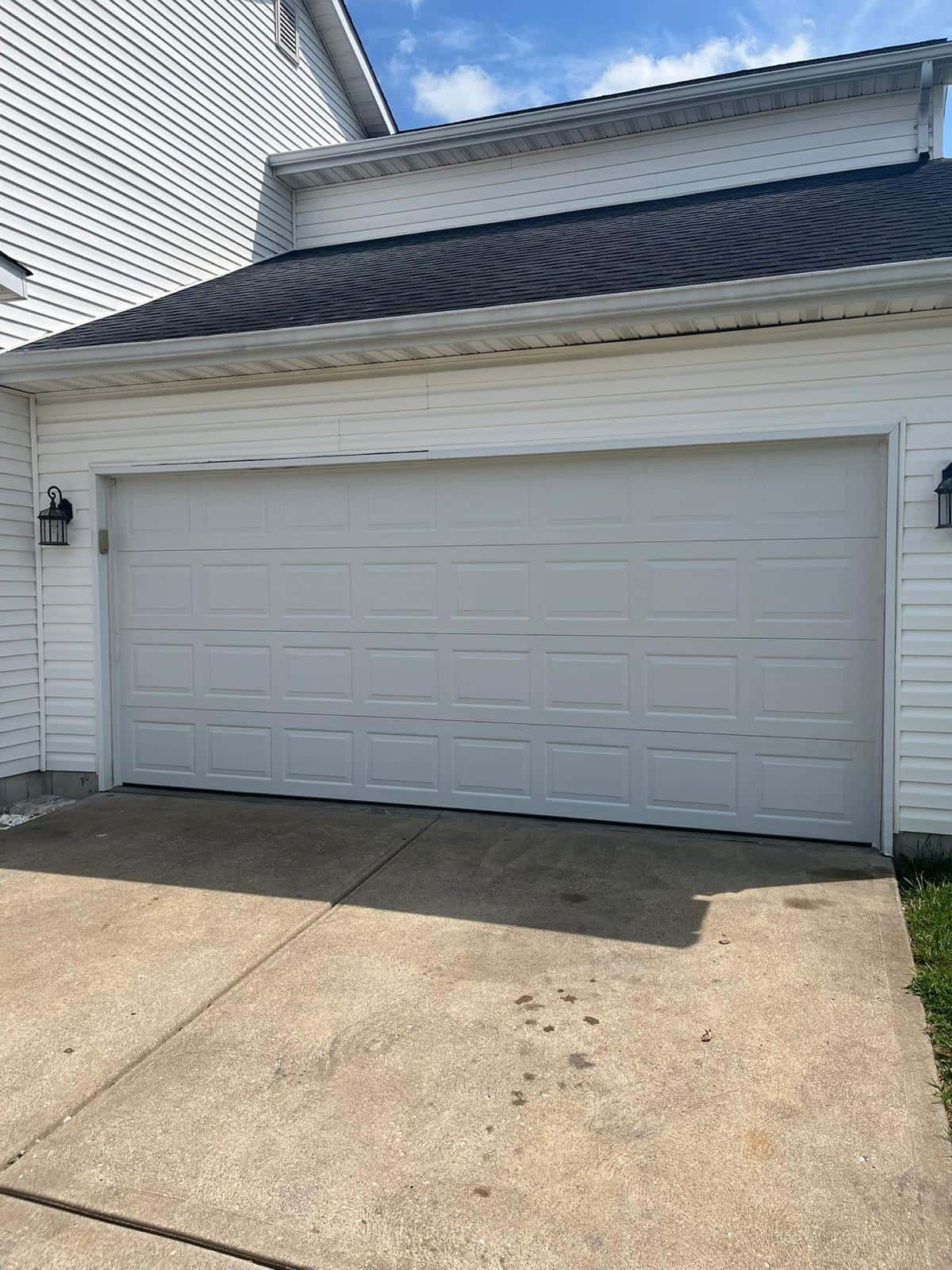
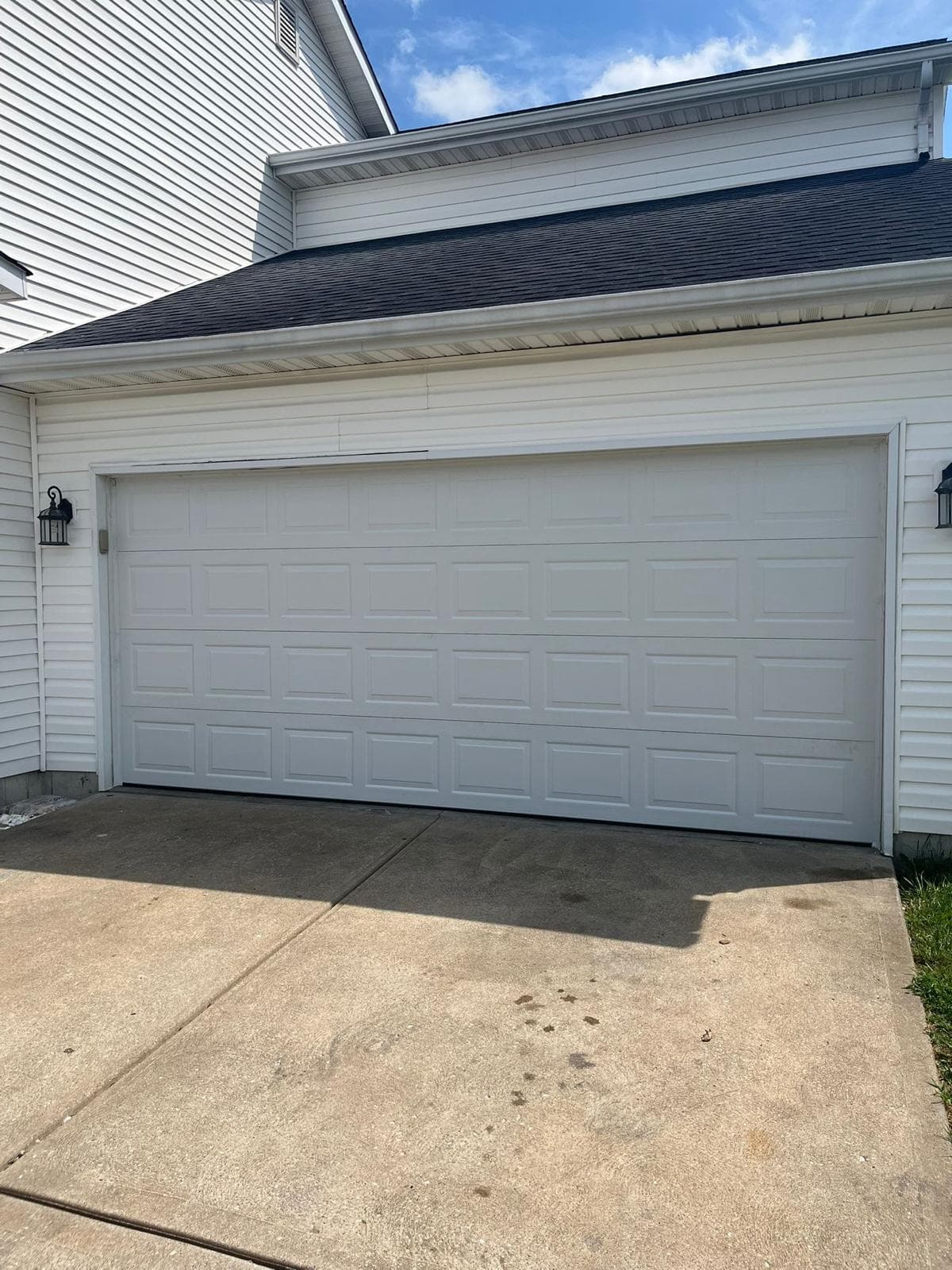
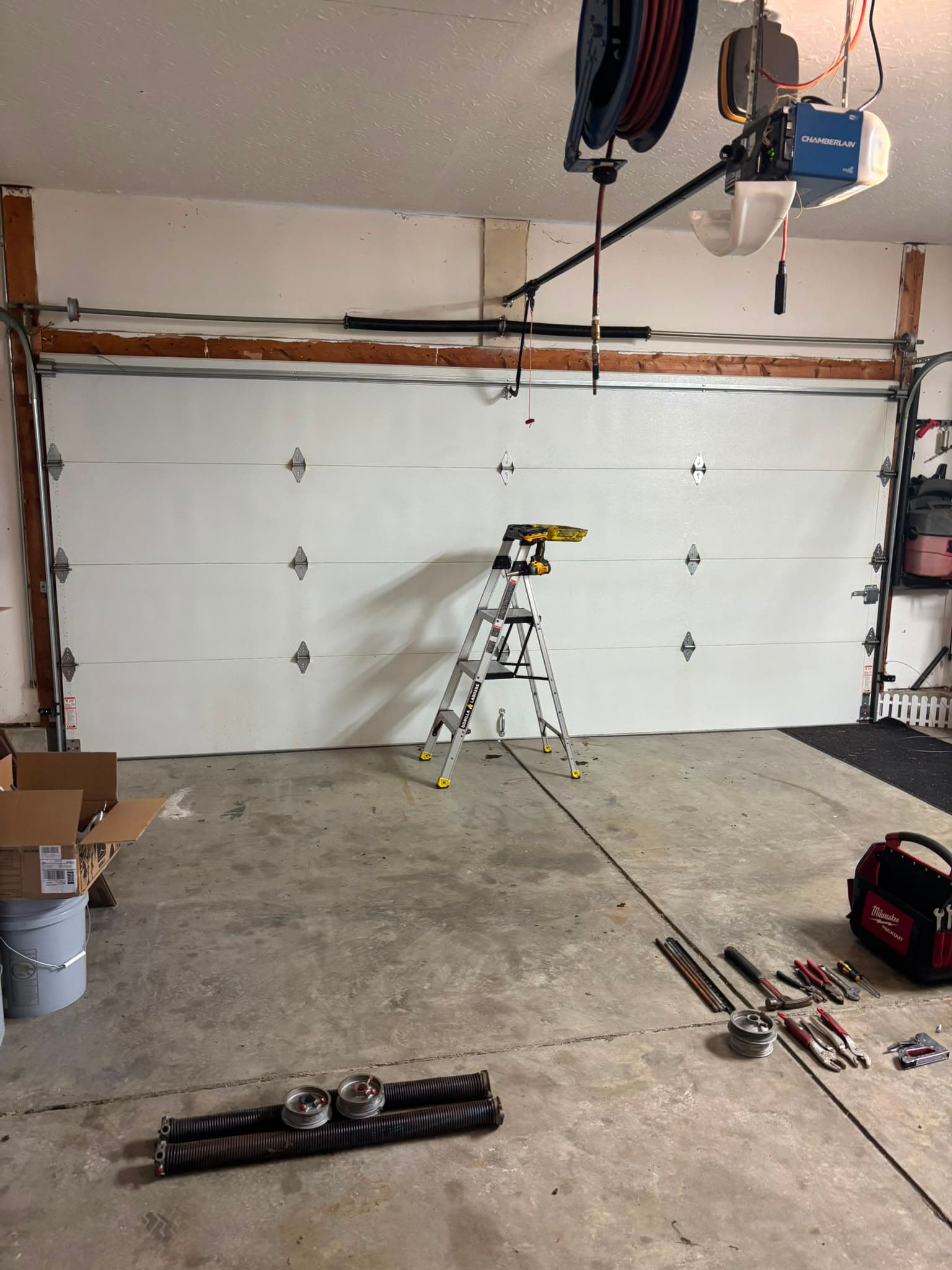
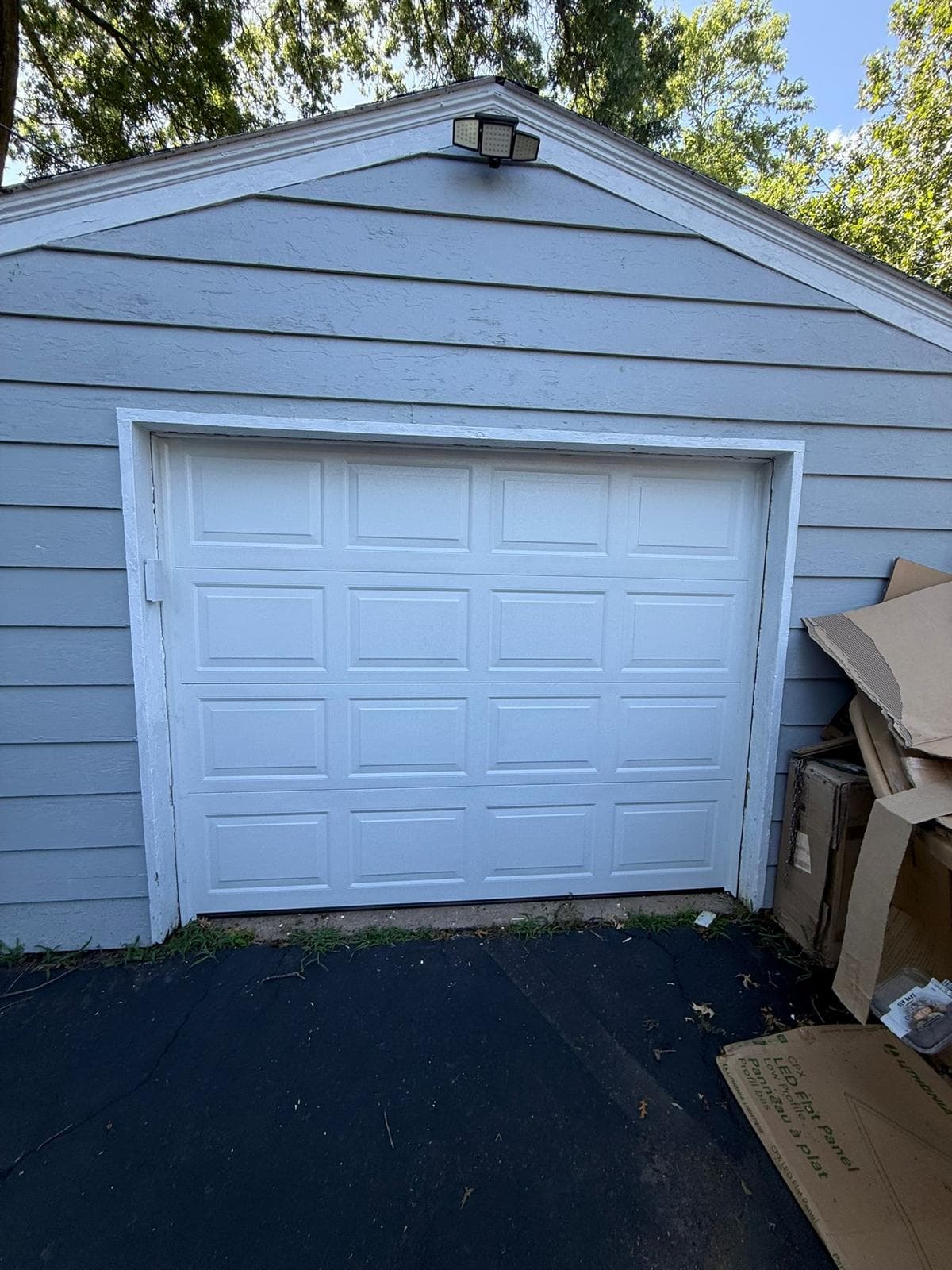
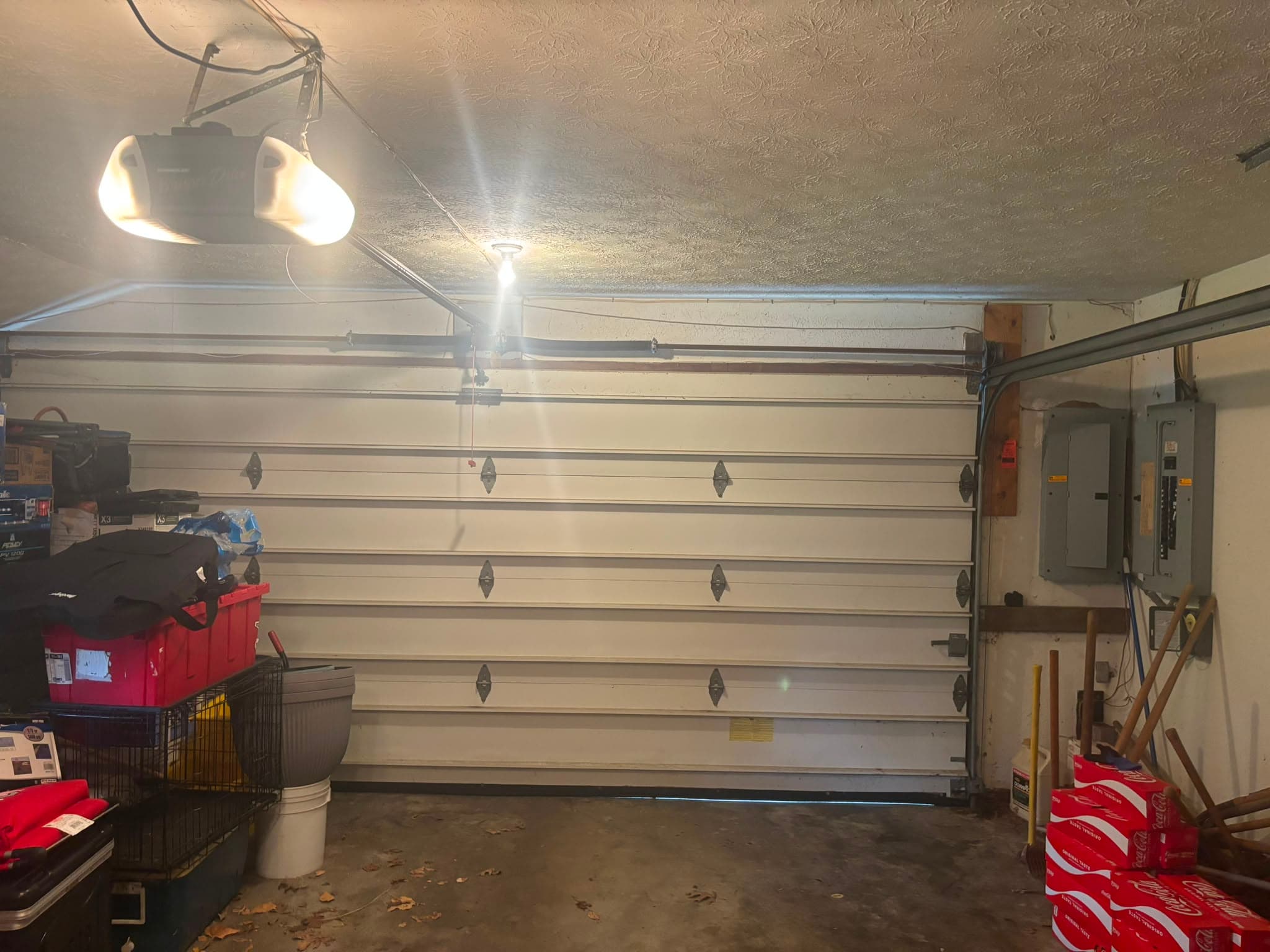
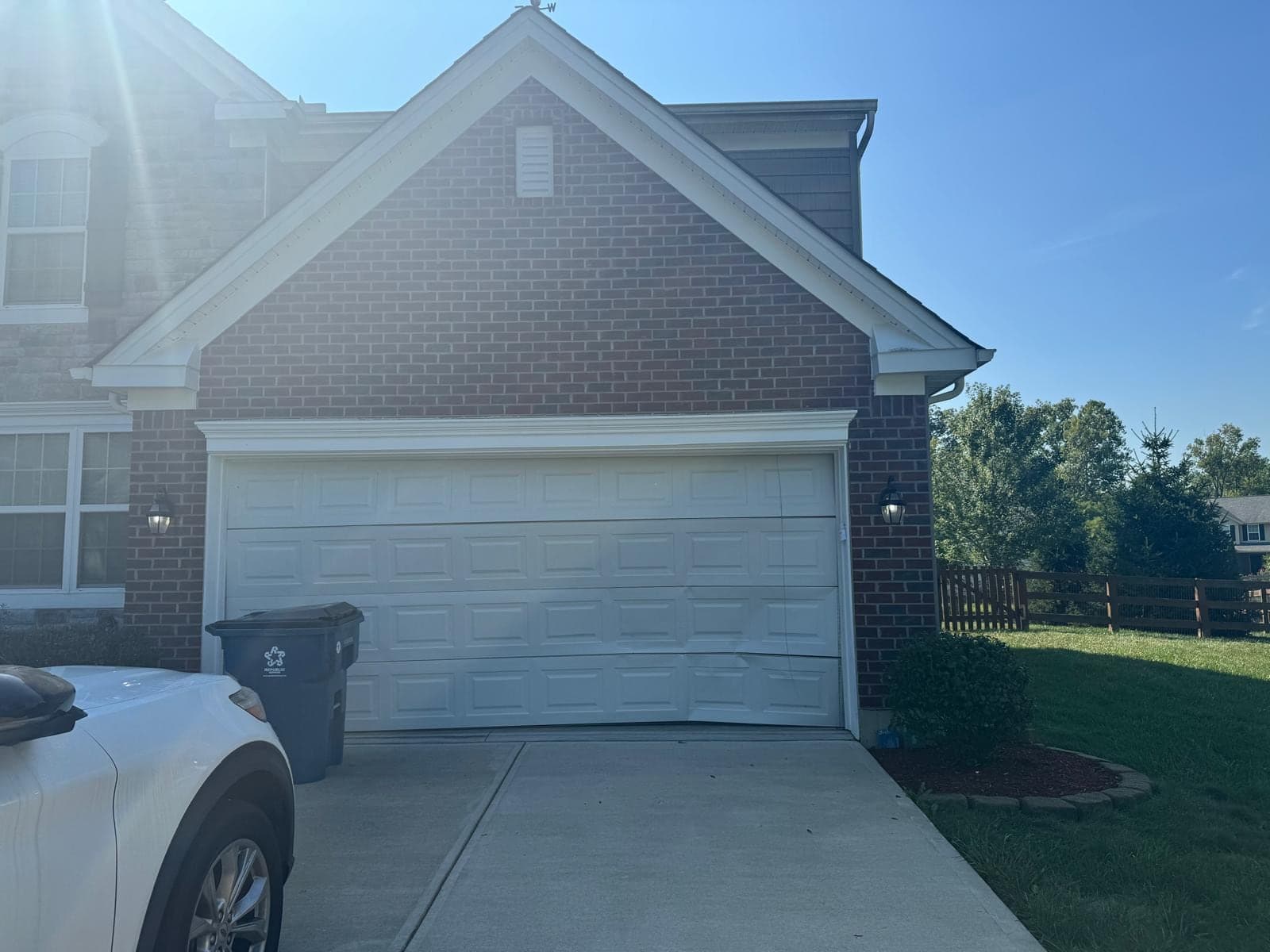
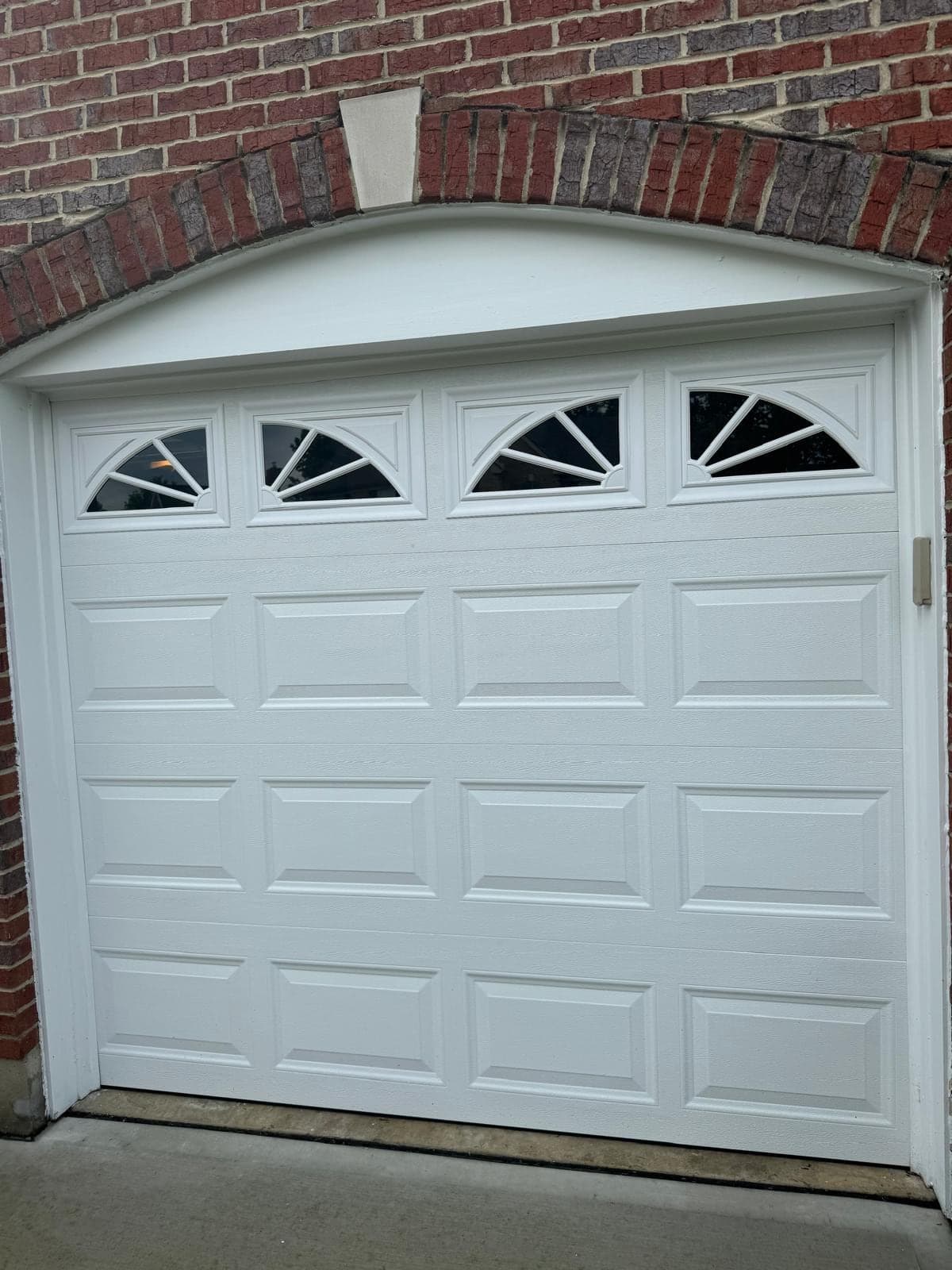
Real jobs, real photos
Every photo on this site is from a job we did. No stock photography and no AI-generated technicians — a site that argues for honesty should not open with a fake picture.
In their words
What customers say on Google
Copied word for word from public Google reviews, first name and last initial. Read all 45 reviews — 5.0 average.
- ★★★★★
“I can’t say enough good things about this service! My garage door suddenly needed attention, and they came out last minute, after 8 PM, when most people would have been done for the night.”
- ★★★★★
“Door wasn’t opening and after 90 minutes of YouTube diagnostics I gave up and called for help. Fifteen minutes after he showed up, I’m back in business and have good advice for next steps on keeping my doors in great shape.”
- ★★★★★
“Great price, very good and efficient job replacing bad garage door opener.”
- ★★★★★
“Commercial facility previously repaired by this company. Overhead spring broke. Warranty was honored. Quick and courteous service. Recommend.”
- ★★★★★
“I would give 5 1/2 stars if it was an option. Technician was friendly and knowledgeable. Arrived within timeframe as promised and diagnosed and solved with no issues.”
- ★★★★★
“Got the job done fast and worked with me well on price very good job”
Common questions
Questions we get asked most
Do you charge for a call-out or an estimate?
No. The visit and the 21-point safety inspection are free, including the written report, and there is no obligation to book work afterwards. If we find the door is fine, we tell you that.
Are you really open 24 hours?
Yes. Our Google Business Profile lists us as open 24 hours because we are. Broken springs and doors stuck open with a car inside are treated as emergencies at any hour.
How much does garage door repair cost in Cincinnati?
It depends on which part failed, and we do not quote sight-unseen because that means either overpricing you or revising the number upward later. What we can tell you is that the diagnosis costs nothing — you get the written findings and a price before anything is touched.
Do you cover Northern Kentucky?
Yes, and it is not a surcharge zone. Covington, Newport, Florence, Fort Thomas, Erlanger, Independence, Union and the rest of Boone, Kenton and Campbell counties are all inside our normal service area.
My garage door spring broke. Can I replace it myself?
This is the one repair we genuinely advise against. A torsion spring under tension stores a large amount of energy and releases it in a fraction of a second if a winding bar slips. Most other garage door work is reasonable DIY; this is not.
How quickly can you get here?
Response time depends on where you are in the metro and what is already booked, but we run 24 hours a day rather than a next-available-appointment model, specifically because garage doors tend to fail with a car inside.
Talk to someone who works on these every day
We are open 24 hours across Greater Cincinnati and Northern Kentucky. The visit and the free 21-point safety inspection cost nothing, and you get the written findings whether or not you book work.